
An NIA official, who was part of the team that interrogated David Headley in FBI custody, tells Vicky Nanjappa that the Pakistani-American terrorist was beaming with pride each time they asked him about his association with the Lashkar and also his role in the 26/11 attacks.

In a significant claim, Pakistani-American terrorist David Coleman Headley on Thursday said that Ishrat Jahan -- who was killed in an alleged fake encounter in 2004 in Gujarat --was actually a suicide bomber of Lashkar-e-Tayiba terror outfit.

A recent ProPublica investigation termed Pakistani-American Lashkar-e-Tayiba operative and 26/11 accused David Coleman Headley as a double agent working for both the American Central Intelligence Agency and the Pakistani Inter Services Intelligence.
International arrest warrants have been issued by the Interpol against five Pakistani nationals for their alleged role in the Mumbai terror attack and plotting to carry out more strikes.
David Coleman Headley, the American Lashkar-e-Tayiba suspect in the Mumbai terror attack case, did not disclose his Pakistani-origin while seeking an Indian visa, raising no alarm bells at the Indian Consulate in Chicago. Headley, who was earlier called Dawood Gilani, gave 'Headley' as his last name at birth in his visa application and wrote his father's name as 'William Headley', according to reliable information.
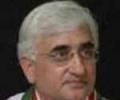
External Affairs Minister Salman Khurshid has written to his United States counterpart Hillary Clinton requesting for extradition of Pakistani-American Lashkar-e-Tayiba terrorist and Mumbai terror accused David Headley and his accomplice Tahawwur Hussain Rana.

'I am convinced Headley was working for the Americans, for the FBI. I had nicknamed him agent Headley,' Rahul said in an interview to UK's Channel 4.
'Headley and his counsel agreed to the meetings (with the Indian investigators) and Headley answered the Indian investigators' questions over the course of seven days of interviews. There were no restrictions on the questions posed by Indian investigators,' said a statement from the US Justice Department
There is still some possibility of extraditing Pakistani-American Lashkar-e-Tayiba terrorist David Headley to India, if the Mumbai terror attacks convict violates his plea agreement, a US federal attorney has indicated.
While the Union home ministry issues statements time to time that it is hopeful about Headley's extradition, many within the establishment know for a fact that it is beyond impossible for this to happen thanks to the plea bargain secured by the Lashkar operative
Ambiguous replies about his travels abroad aroused the suspicions of airport officials and led to the arrest of Pakistani-American Lashkar-e-Tayiba operative, David Headley, charged with criminal conspiracy in the Mumbai terror attacks.
Days after Pakistani-American Lashkar-e-Tayiba operative David Headley implicated Inter-Services Intelligence in the Mumbai attacks during his testimony in a United States court, Interior minister Rehman Malik has described him as a convict who has "no credibility and cannot be trusted."
The United States on Tuesday said bringing to justice the perpetrators of 26/11 was still an "unfinished business" which was high on its priority list, days after Pakistani American Lashkar-e-Tayiba terrorist David Headley was sentenced to 35 years in jail by a Chicago court.

A "remorseful" Pakistani-American Lashkar-e-Tayiba terrorist David Headley made a last ditch effort to have his sentence reduced by writing an emotional letter to the judge claiming he is a changed man and was sorry of his past doings.
Pakistani-American Lashkar-e-Tayiba terrorist David Headley, who "unquestionably contributed" to the Mumbai attacks that claimed 166 lives, was sentenced by a Chicago court
Lisa Curtis, erstwhile Central Intelligence Agency South Asia analyst and ex-senior Congressional staffer on the powerful Senate Foreign Relations Committee, has said that the arrest and findings from the investigation of Chicago-based Pakistani-American Lashkar-e-Tayiba operative John Coleman Headley, has awakened US officials to the gravity of the threat of the LeT and other Pakistan-based terrorist groups.
Faiza Outlaha, the estranged wife of arrested Pakistani American Lashkar-e-Tayiba operative and 26/11 conspirator David Coleman Headley, is likely to be questioned by the National Investigating Agency; and for that a request has been sent out to Morocco, the country where she resides.
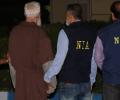
According to the chargesheet, Rana played a crucial role in supporting terrorist David Coleman Headley, a Pakistani-American operative linked to Lashkar-e-Taiba, by facilitating his reconnaissance missions across Mumbai.
The arrest of Pakistani-American Lashkar-e-Tayiba operative David Coleman Headley, that busted an LeT plot to carry out terror strikes in India, has been classified by the Federal Bureau of Investigation as its second biggest case for the year 2009.
Although three years have gone by since the National Investigation Agency was formed, the report card for India's premier agency probing cases of terror does not look all that good. But the bigger question that we must ask is whether the agency has been allowed to function in a manner that it ought to have, reports Vicky Nanjappa.
Ever since Headley was arrested in US, there has been a lot of talk regarding the Karachi Project, considered to be one of the most ambitious projects staged by the ISI where it plans to combine Pakistani forces and home-grown terrorists to launch a spate of terror attacks on India, reports Vicky Nanjappa.
Dismissing concerns about the plea agreement between the United States government and Pakistani-American Lashkar-e-Tayiba operative David Coleman Headley, Home Minister P Chidambaram on Friday said the deal was not a 'setback' for India's probe into the terror attack on Mumbai. Headley, who was arrested in October last year in Chicago by the Federal Bureau of Investigation, has pleaded guilty to charges of planning and helping carry out the attack on Mumbai.
Pakistani-American Lashkar-e-Tayiba operative David Coleman Headley, accused of plotting the 26/11 Mumbai terror attacks and conspiring to target a Danish newspaper, pleaded guilty on Thursday before a United States court. Headley, 49, who was arrested by the Federal Bureau of Investigation's joint terrorism task force on October 3, 2009, told US District Judge Harry Leinenweber that he wanted to change his plea to guilty, in an apparent bid to get a lighter sentence.
The Indian government will be 'satisfied' if Pakistani-American Lashkar-e-Tayiba operative David Coleman Headley, who pleaded guilty in a United States court to his involvement in the Mumbai terror attacks, is awarded a life sentence, Home Secretary G K Pillai said on Friday. "The US attorney general has advised a sentence of life imprisonment. If he gets a sentence of life imprisonment, I don't think the government of India will be unsatisfied," he said.
Official access for Indian investigators probing the Mumbai terror attack to Pakistani-American Lashkar-e-Tayiba operative David Coleman Headley will help prove to the world Pakistan's involvement in the 26/11 strikes, the Bharatiya Janata Party has stated."It (consequences of his pleading guilty before a United States court) is a mixed bag. As we cannot get extradition, it is a loss. But, at the same time, we can get official access," BJP said.
A top United States intelligence official has said that the probe in the Mumbai terror siege is an 'excellent example' of cooperation between India and the United States, even as Indian authorities are smarting over the US administration's refusal to hand over Pakistani-American Lashkar-e-Tayiba operative David Coleman Headley on charges related to his involvement in the 26/11 attack.
In a volte-face, Pakistani-American Lashkar-e-Tayiba operative David Coleman Headley, accused of plotting the 26/11 Mumbai terror attacks and conspiring to target a Danish newspaper, pleaded guilty on Thursday before a US court in Chicago.
Ejaz Naqvi, counsel for Sabahuddin, told rediff.com that he would be filing a petition before the Supreme Court to make Headley a party to the proceedings before the Bombay high court, which is hearing a set of three appeals in connection with the 26/11 case.
India is likely to press for a clarification from the US on why there was no mention in David Headley's passport that he had changed his name in a detailed questionnaire to be sent to that country after Washington handed over a one-page report on the issue.
Union Home Minister P Chidambaram has said that there was no confusion over the issue of Indian investigators getting direct access to Pakistani-American Lashkar-e-Tayiba operative David Coleman Headley or not.
"I'm very glad you raised this, Ishaan. I didn't plant it. I promise you. This guy does this to his dad," Tharoor replied amid laughter from the audience.

'...and the country should be impoverished completely.' 'Once this is done, the political class would take over and then play a part in real democracy where the army is under the control of the government, not vice-versa.'

"The difference between the state and non-state actors will come to an end after this statement," Minister of State for Home Kiren Rijiju told reporters.

Tahawwur Hussain Rana, a Canadian national convicted in the United States for his role in the 2008 Mumbai terror attacks, has been extradited to India. Rana, a close associate of Pakistani-American terrorist David Coleman Headley, was involved in the conspiracy from 2005 onwards and assisted Headley in obtaining a visa for India. He is the third person to be sent on trial in India for the 26/11 attacks after Ajmal Kasab and Zabiuddin Ansari alias Abu Jundal. Rana's extradition comes after US President Donald Trump approved the request.

'There's a lot of sense in what Prime Minister Modi did, but the Indian government has to be really prepared for a really sharp escalation spiral.'
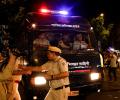
Tahawwur Rana, a Canadian citizen and native of Pakistan, was extradited to India to face charges related to his alleged role in the 2008 Mumbai terror attacks. The US Department of Justice said Rana allegedly commended the LeT terrorists who carried out the attacks and suggested they should be awarded Pakistan's highest gallantry award. Rana is accused of facilitating a fraudulent cover for his childhood friend, David Headley, to conduct surveillance in Mumbai for the Lashkar-e-Taiba (LeT) terrorist group. He is also accused of helping Headley submit false visa applications to Indian authorities. This extradition follows a lengthy legal process that began in 2020 with India's request for Rana's surrender. Rana, who was previously convicted in the US for providing material support to LeT, will now face trial in India on 10 criminal charges related to the Mumbai attacks.
Tahawwur Rana, accused in the 2008 Mumbai terror attacks, has renewed his application to the US Supreme Court seeking a stay of his extradition to India. The Supreme Court will hear the application next month. Rana, currently detained in Los Angeles, claims his extradition would violate US law and expose him to torture in India due to his health and Muslim background. The US government has denied these claims and authorized his surrender to India, citing the Extradition Treaty between the two countries. The Supreme Court's decision will determine if Rana will face justice in India or remain in the United States.

'Had Haji Pir and/or Skardu been taken, the message would have gone out not just to General Asim Munir and his cohort in the Pakistan army but to the Pakistani people that every terrorist incident in India would lead to substantial loss of territory in PoK.'
Tahawwur Hussain Rana, a Canadian national accused of involvement in the 2008 Mumbai terror attacks, has been extradited to India from the United States. Rana's interrogation is expected to shed light on the role of Pakistani state actors in the attacks, which claimed 166 lives. Indian authorities are particularly interested in his travels across India in the days leading up to the attacks, including visits to Hapur, Agra, Delhi, Kochi, Ahmedabad, and Mumbai. Rana's extradition follows a lengthy legal battle, with the US Supreme Court ultimately denying his application to challenge it. Rana is known to be associated with Pakistani-American terrorist David Coleman Headley, one of the main conspirators of the 26/11 attacks. The investigation into the Mumbai attacks has implicated senior members of terror outfits Lashkar-e-Taiba (LeT) and Harkat-ul Jihadi Islami (HuJI), as well as officials from Pakistan's Inter-Services Intelligence (ISI).

'It is typical of China's strategic deception of making virtue out of necessity,' observes Rup Narayan Das.
 © 2026 Rediff.com - Advertise with us - Disclaimer - Privacy Policy - Sitemap - Feedback - About us - Terms of use - Grievances